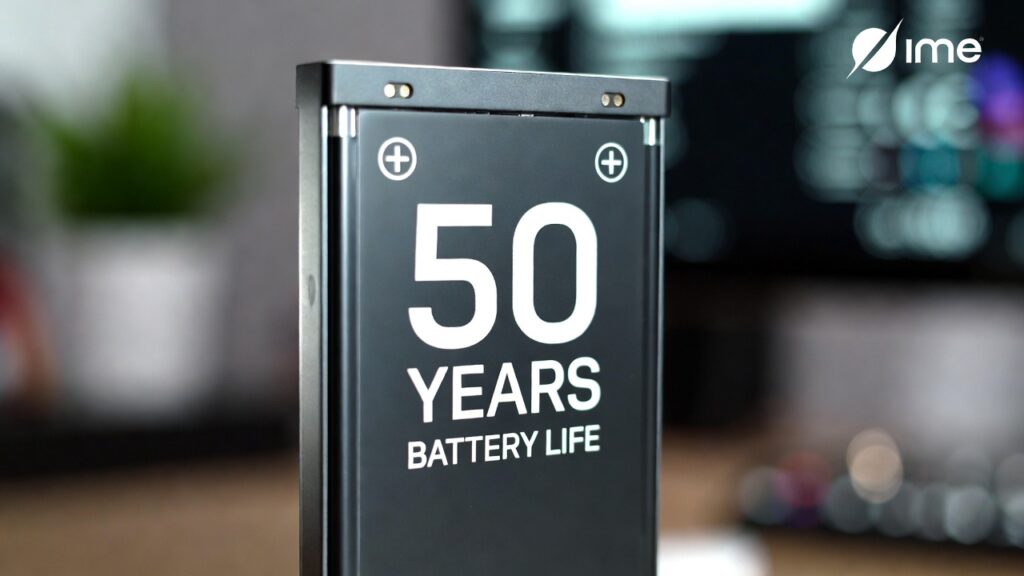
Subtitle: A tiny radioactive battery could mean you never have to plug in your smartphone, drone, or pacemaker again.
Forget fumbling for a charger at the end of the day. A tiny new technology could be about to re-write the rules of energy storage, promising a staggering 50 years of power for consumer electronics without ever needing a recharge.Chinese tech start-up Betavolt has unveiled a revolutionary modular nuclear battery, a technology that harnesses the energy released by the decay of the radioactive isotope nickel-63. While “nuclear” might sound intimidating, Betavolt assures that the technology is completely safe for everyday use.
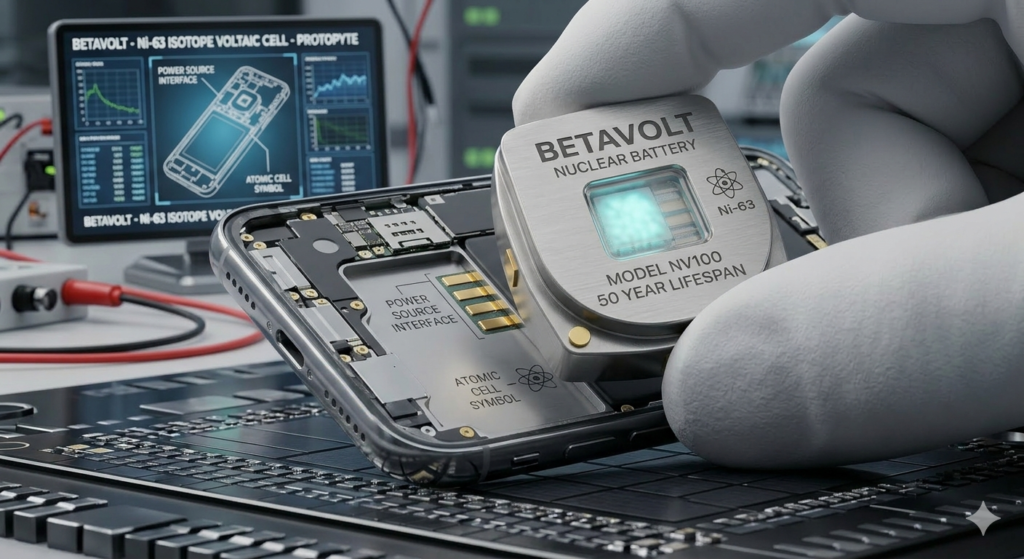
Atomic Energy in Your PocketThe key to this breakthrough is scale and safety. Betavolt has successfully squeezed this technology into a module smaller than a coin (15 \times 15 \times 5 millimeters). Inside, layers of diamond semiconductor transform the heat generated by the beta decay of nickel-63 directly into electricity.
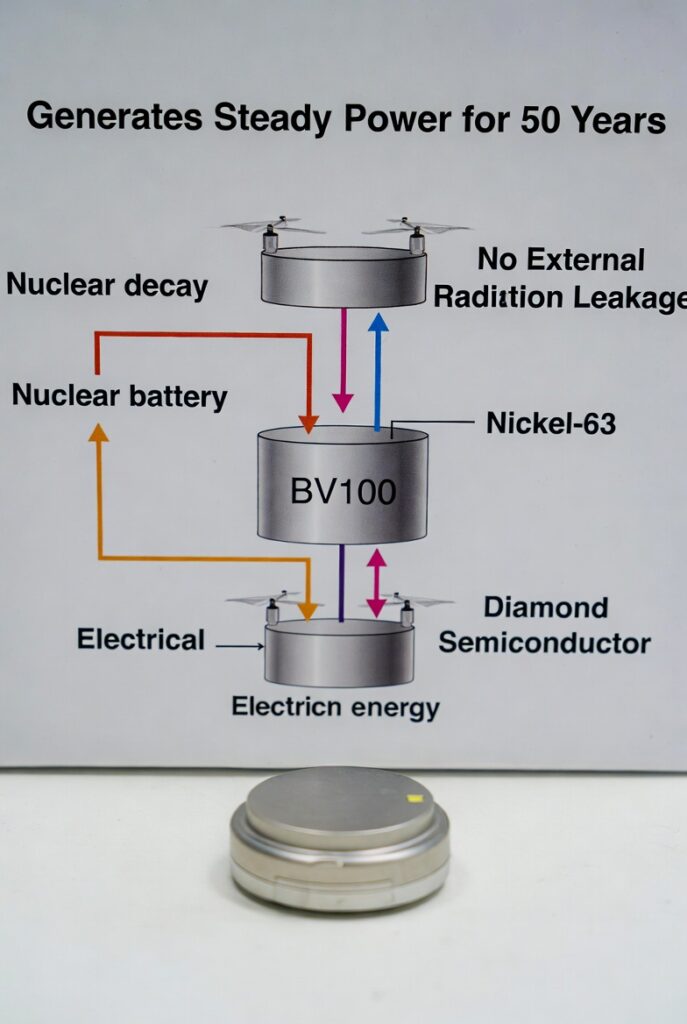
Crucially, the company claims the battery emits no external radiation, making it safe for use in devices that come into close contact with the body. The design is robust, with a multi-layered structure that prevents any radioactive material from leaking, and it’s built to withstand extreme temperatures, from as cold as -60^{\circ}C to as hot as 120^{\circ}C.
A Future of ‘Infinite’ AutonomyThe implications are breathtaking, with potential applications across multiple fields:Consumer Gadgets: Imagine a smartphone that lasts for decades, or a drone that could fly for years on a single power cell. This would erase “battery anxiety” and significantly reduce the environmental e-waste from discarded lithium batteries.Medical Marvels: Pacemakers and other life-critical medical implants could operate for a lifetime without the need for risky surgical battery replacements.Industrial & Space Exploration: Autonomous sensors in remote locations and power sources for deep-space missions could benefit from this incredibly long-lived energy source.

The Road AheadWhile this represents a monumental leap forward, we are still looking at a few years of development. Betavolt is currently conducting pilot tests, and the initial model generates about 100 microwatts of power at 3 volts – enough for small sensors or an initial boost, but not yet sufficient to fully power a power-hungry flagship smartphone on its own. The company’s goal is to scale up production and launch a 1-watt version of the battery by 2025.

The big question remains: Would you be comfortable carrying a “tiny nuclear reactor” in your pocket? Share your thoughts on the future of this atomic power revolution in the comments!